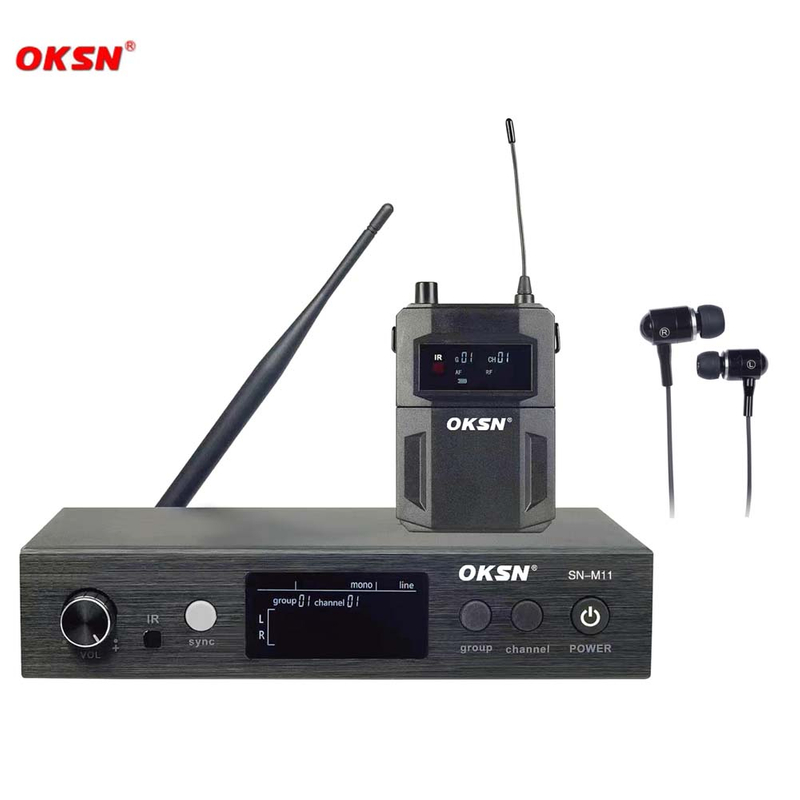
Views: 12 Author: Site Editor Publish Time: 2025-03-19 Origin: Site
In the world of audio technology, few innovations have had as profound an impact as wireless in-ear monitors (IEMs). These compact, high-performance devices have transformed the way musicians, audio engineers, and even everyday listeners experience sound. By combining cutting-edge wireless technology with the precision of in-ear audio delivery, wireless IEMs have become an indispensable tool for professionals and enthusiasts alike. This article explores the evolution, benefits, and future of wireless in-ear monitors, shedding light on why they have become a game-changer in the audio industry.
In-ear monitors have been around for decades, initially gaining popularity among musicians and performers who needed a reliable way to hear themselves on stage. Traditional wired IEMs provided a solution by delivering personalized audio mixes directly to the ears, reducing stage noise and improving sound clarity. However, the wires often posed challenges, such as tangling, limited mobility, and discomfort during performances.
The advent of wireless technology marked a turning point. Wireless in-ear monitors eliminated the need for cumbersome cables, offering greater freedom of movement and convenience. Early versions relied on radio frequency (RF) technology, which, while effective, had limitations such as interference and limited range. Today, advancements in Bluetooth and other wireless protocols have made wireless IEMs more reliable, versatile, and accessible than ever before.
Unparalleled Mobility and Freedom
One of the most significant advantages of wireless IEMs is the freedom they provide. Musicians on stage can move around without being tethered to a mixing console, while fitness enthusiasts can enjoy uninterrupted workouts without worrying about cables. This mobility is particularly valuable in live performances, where artists need to engage with their audience and move freely across the stage.
Superior Sound Quality
Modern wireless IEMs are designed to deliver exceptional audio quality, rivaling their wired counterparts. High-resolution drivers, advanced noise isolation, and customizable sound profiles ensure that users hear every detail with clarity. For musicians, this means accurate monitoring of their performance, while audiophiles can enjoy immersive listening experiences.
Noise Isolation and Hearing Protection
Wireless IEMs often come with noise-isolating or noise-canceling features, which block out external sounds and protect the ears from excessive noise. This is especially important for musicians performing in loud environments, as it helps prevent hearing damage while ensuring they can hear their mix clearly.
Customization and Personalization
Many wireless IEMs offer customizable ear tips and molds, ensuring a secure and comfortable fit for every user. This not only enhances comfort but also improves sound isolation and audio quality. Additionally, some models allow users to adjust their audio mix, giving them control over their listening experience.
Versatility Across Applications
Wireless IEMs are not just for musicians. They are widely used in fitness, gaming, and everyday listening. Their compact design and wireless functionality make them ideal for a variety of scenarios, from running marathons to commuting on a busy train.
The rapid evolution of wireless in-ear monitors can be attributed to several technological advancements:
Bluetooth 5.0 and Beyond
The introduction of Bluetooth 5.0 and subsequent versions has significantly improved the performance of wireless IEMs. With faster data transfer rates, lower latency, and extended range, users can enjoy seamless audio streaming without interruptions. This is particularly important for musicians who require real-time monitoring without delay.
True Wireless Stereo (TWS)
True wireless technology has taken the audio world by storm, and IEMs are no exception. TWS earbuds, which lack any physical connection between the two earpieces, offer a truly wireless experience. This design enhances comfort and portability, making them a popular choice for consumers.
Active Noise Cancellation (ANC)
ANC technology has become a standard feature in many wireless IEMs. By using microphones to detect and cancel out external noise, ANC ensures a distraction-free listening experience. This is particularly beneficial in noisy environments, such as concerts or airplanes.
Long-Lasting Battery Life
Battery life has always been a concern for wireless devices, but modern wireless IEMs have made significant strides in this area. Many models now offer extended playtime, with some providing up to 10 hours or more on a single charge. Additionally, portable charging cases make it easy to recharge on the go.
Smart Features and Connectivity
Wireless IEMs are increasingly integrating smart features such as touch controls, voice assistants, and app connectivity. These features enhance usability and allow users to customize their experience. For example, some models offer EQ adjustments through a companion app, enabling users to tailor the sound to their preferences.
As technology continues to advance, the future of wireless in-ear monitors looks incredibly promising. Here are some trends and developments to watch for:
Enhanced Audio Codecs
The adoption of high-quality audio codecs, such as LDAC and aptX, will further improve sound quality and reduce latency. This will make wireless IEMs even more appealing to audiophiles and professionals.
Integration with Augmented Reality (AR)
As AR technology becomes more prevalent, wireless IEMs could play a key role in delivering immersive audio experiences. Imagine attending a virtual concert where the sound changes as you move through the virtual space.
Health and Fitness Tracking
Some wireless IEMs already include fitness tracking features, such as heart rate monitoring. Future models could expand on this, offering comprehensive health metrics and integrating with wearable devices.
Sustainability and Eco-Friendly Design
As consumers become more environmentally conscious, manufacturers may focus on creating sustainable wireless IEMs using recyclable materials and energy-efficient components.
Wireless in-ear monitors have come a long way since their inception, evolving from niche tools for musicians to versatile devices used by millions worldwide. Their combination of mobility, sound quality, and advanced features has made them a cornerstone of modern audio technology. As innovation continues, wireless IEMs are poised to redefine how we experience sound, offering new possibilities for entertainment, communication, and creativity. Whether you're a performer, a fitness enthusiast, or simply a lover of great audio, wireless in-ear monitors are a testament to the power of technology to enhance our lives.
Exhibition Name: The 124th Canton Fair Booth number:5.1 L31 Date:15-19 Oct. 2018 Address: China export&import commodity exhibition center ( Pazhou pavilion)
Dear Sirs /Madam:We hereby sincerely invite you and your company representatives to visit our booth at the Canton Fair from April 15th to 19th on 2019.It would be a great pleasure to meet you at the exhibition .We expect to establish long-term business relations with your company in future .Exhibiti
OKSN Electronics Technology Co. Ltd.was established in 1997. It lies in the microphone production base--En'ping City, Guangdong Province, China.Our factory is a professional manufacturer for microphone integrated with designing,investment,produce and sell. The products include wire/wireless microp
The best audio mixer depends on channel count, effects, and connectivity needs. Compact mixers like the OKSN AS-4 suit small setups with 4 channels, while larger boards like the OKSN FX12 (8/12/16 channels) fit bands and live venues. Look for phantom power, built-in EQ, USB/Bluetooth connectivity, a
Choosing the right audio equipment—whether a wireless microphone headset, professional audio mixer, or instrument microphone—depends on your use case, environment, and performance needs. This guide covers what each type of equipment does, how they differ, and which OKSN products are worth considerin
A karaoke microphone is a handheld mic built to capture vocals for singing at home, in KTV rooms, or at events. Wired karaoke microphones offer consistent sound, zero battery worries, and lower cost, making them ideal for fixed setups. Wireless karaoke microphones give you freedom to move and are be
Choosing between a 200 watt amp and a 400 watt amp depends on your venue size, application, and speaker load. A 200 watt amp suits smaller KTV rooms and rehearsal spaces, while a 400 watt pro audio power amplifier is better suited for stage performance and larger sound installations. Matching amplif
A professional audio setup requires three core components working in harmony: an audio mixer to blend and control sound sources, a power amplifier to drive your speakers, and a wireless microphone system to capture vocals or instruments without cable restrictions. Choosing the right combination depe
China has become a leading global source for professional audio equipment, including audio mixers, karaoke microphones, and power amplifiers. Manufacturers like OKSN Electronics, based in Enping, Guangdong, produce high-quality gear that rivals Western brands—at highly competitive price points. This
What Is an Audio Mixer? A Complete Guide to Sound MixersTL;DR: An audio mixer is a device that combines, adjusts, and routes multiple audio signals into a single output. Sound mixers range from compact 4-channel units for home studios to professional audio mixers used in live events and broadcast pr
A karaoke microphone is a handheld wireless or wired microphone designed to deliver clear, feedback-resistant vocal audio in home, KTV, and stage settings. Cordless karaoke microphones—typically operating on UHF bands between 500 MHz and 865 MHz—offer the most flexibility, with modern systems reachi
Audio Mixer, Sound Mixer, Power Mixer: What's the Difference?Quick answer: An audio mixer combines and controls multiple sound signals into a single output. Sound mixer is simply another name for the same device. A power mixer adds a built-in amplifier to that setup. Choosing the right type depends
A pro audio power amplifier boosts low-level audio signals to drive speakers at performance-ready volume levels. Choosing the right one depends on your output power needs, venue size, impedance compatibility, and audio quality standards like THD and S/N ratio. This guide covers everything you need t
Mixing Console vs. Sound Mixer vs. Power Mixer: What's the Difference?Quick answer: A mixing console, sound mixer, and power mixer all blend multiple audio signals—but they differ in built-in amplification, channel count, and intended use. A power mixer includes a built-in amplifier, while a standar
A professional audio sound mixer takes multiple audio signals, balances their levels, and combines them into a single output. For home recording, a compact USB mixer like the Z-4 is ideal, while live venues and large broadcast setups benefit from high-capacity mixing consoles like the 16-channel DG-
Choosing the right audio sound mixer and wireless microphone system depends on your use case—live performances, karaoke, conferencing, or studio recording. This guide breaks down the key product types, their specifications, and how to match them to your specific audio needs.Getting your audio setup
The best wireless microphone system depends on your specific application. For stage performances and singing, choose a dual-channel UHF cordless microphone like the SN-U93. For corporate environments, select a dedicated conference microphone system. Always source your gear from an established microp
Building a reliable sound system requires pairing a professional audio mixer with frequency-hopping wireless microphones and robust power amplifiers. Choosing equipment from a reputable China Microphone Factory ensures access to advanced features, like 16 DSP effectors and 60-meter coverage ranges,
Choosing the right audio equipment requires matching the system to your specific environment. Use UHF wireless microphones like the OKSN SN-P950 for teaching and stage performances. Select a dedicated conference room mic like the AB-222 for corporate meetings, and rely on a wireless in ear monitor s