Views: 7 Author: Site Editor Publish Time: 2025-03-10 Origin: Site
In the realm of live performances, sound quality is paramount. For musicians, ensuring that they can hear themselves and each other clearly is crucial to delivering a polished and engaging show. Enter the wireless in-ear monitor system—a technological marvel that has revolutionized the live music experience. This essay delves into the significance, benefits, and evolution of the wireless in-ear monitor system, highlighting its impact on live performances and its role in shaping the future of music.
The Significance of Wireless In-Ear Monitor Systems
For decades, musicians relied on wedge monitors or floor monitors to hear themselves and their bandmates during live performances. These speakers, placed strategically on stage, allowed performers to monitor their sound mix. However, they had several limitations. Wedge monitors could create feedback issues, and their placement often restricted stage movement. Moreover, they could not provide a customized sound mix for each musician, leading to a less-than-optimal listening experience.
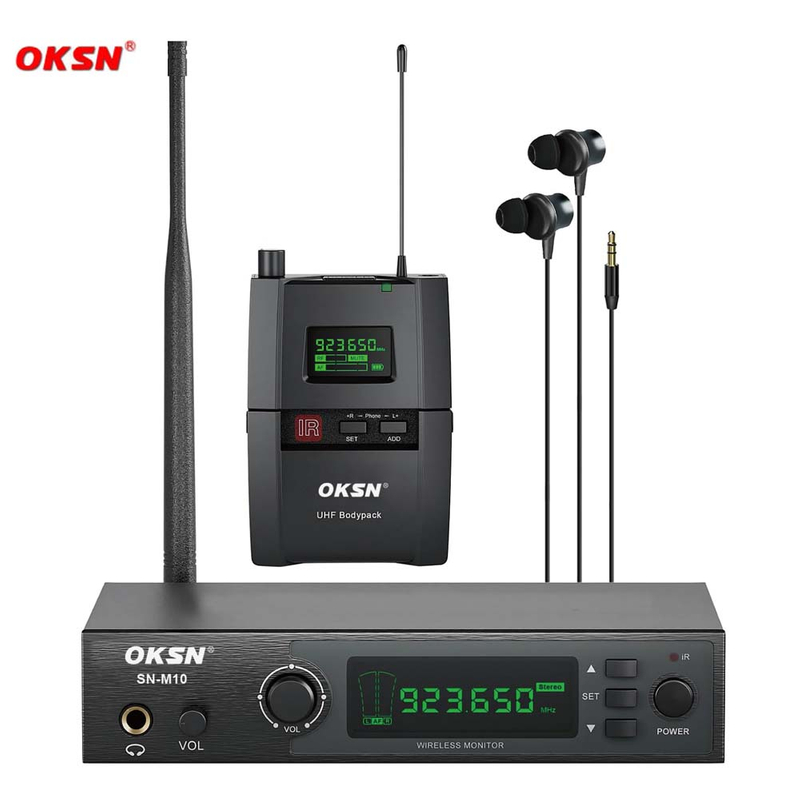
Enter the wireless in-ear monitor system. These systems consist of a small receiver worn by each musician, which connects to a transmitter that sends a customized audio mix directly to their ears via in-ear monitors. The result is a clear, consistent sound mix that is tailored to each performer's needs, allowing them to focus on their performance without being distracted by sound issues.
The significance of wireless in-ear monitor systems lies in their ability to improve sound quality and stage presence. By eliminating feedback and providing a customized sound mix, these systems enable musicians to perform at their best, confident in the knowledge that they can hear themselves clearly. This, in turn, enhances the overall live performance experience for both the musicians and the audience.
Benefits of Wireless In-Ear Monitor Systems
The benefits of wireless in-ear monitor systems are numerous and far-reaching. One of the most immediate advantages is the elimination of feedback. Traditional wedge monitors are prone to feedback, especially in loud environments. Wireless in-ear monitors, however, are designed to minimize this issue, providing a clearer sound mix that is less likely to be interrupted by unwanted noise.
Another key benefit is the ability to create a customized sound mix for each musician. With wireless in-ear monitors, sound engineers can tailor the mix to each performer's preferences, ensuring that they hear the instruments and vocals that are most important to them. This not only enhances the performance but also allows musicians to better communicate with each other on stage.
Wireless in-ear monitor systems also offer greater freedom of movement. With no need for wedge monitors, musicians can move freely around the stage, interacting with the audience and creating a more dynamic performance. This added mobility can lead to more engaging and memorable live shows.
Furthermore, these systems are often more cost-effective in the long run. While the initial investment may be higher, wireless in-ear monitors can reduce the need for additional sound equipment, such as multiple wedge monitors, and can simplify the setup and teardown process. This can save time and money, making wireless in-ear monitor systems an attractive option for both touring bands and venue operators.
The Evolution of Wireless In-Ear Monitor Systems
The wireless in-ear monitor system has undergone significant evolution since its inception. Early systems were prone to interference and had limited range, making them unreliable in some environments. However, advancements in wireless technology have addressed these issues, leading to more robust and reliable systems.
Today's wireless in-ear monitor systems offer improved frequency response, lower latency, and better battery life. Many systems also incorporate features such as diversity reception, which uses multiple antennas to ensure a strong signal, and noise reduction algorithms to minimize background noise.
Moreover, the design of in-ear monitors has improved dramatically. Early models were often uncomfortable and provided poor sound isolation. Modern in-ear monitors, however, feature ergonomic designs and high-quality drivers that provide excellent sound quality and comfort. Some models even incorporate noise-canceling technology to further reduce background noise, enhancing the listening experience.
Impact on Live Performances and the Future of Music
The impact of wireless in-ear monitor systems on live performances has been profound. By improving sound quality and stage presence, these systems have allowed musicians to perform at their best, creating more engaging and memorable live shows. Audience members benefit from this, as they are treated to a more polished and professional performance.
Looking ahead, the future of wireless in-ear monitor systems is bright. As technology continues to advance, we can expect to see even better sound quality, improved battery life, and more innovative features. For example, some systems are already incorporating Bluetooth connectivity, allowing musicians to wirelessly control their sound mix from their smartphones or tablets.
The evolution of wireless in-ear monitor systems also has implications for the music industry as a whole. As these systems become more accessible and affordable, they have the potential to democratize live performance, allowing even smaller bands and artists to deliver professional-quality shows. This could lead to a more diverse and vibrant live music scene, with more opportunities for emerging artists to showcase their talent.
In conclusion, the wireless in-ear monitor system has revolutionized the live performance experience, providing musicians with a clear, consistent sound mix that enhances their performance and allows them to focus on what they do best. As technology continues to advance, we can expect to see even greater improvements in these systems, further shaping the future of music and live performances. Whether you're a seasoned professional or an aspiring musician, the wireless in-ear monitor system is an essential tool for delivering your best performance every time.
Exhibition Name: The 124th Canton Fair Booth number:5.1 L31 Date:15-19 Oct. 2018 Address: China export&import commodity exhibition center ( Pazhou pavilion)
Dear Sirs /Madam:We hereby sincerely invite you and your company representatives to visit our booth at the Canton Fair from April 15th to 19th on 2019.It would be a great pleasure to meet you at the exhibition .We expect to establish long-term business relations with your company in future .Exhibiti
OKSN Electronics Technology Co. Ltd.was established in 1997. It lies in the microphone production base--En'ping City, Guangdong Province, China.Our factory is a professional manufacturer for microphone integrated with designing,investment,produce and sell. The products include wire/wireless microp
A complete professional sound system typically combines three essential components: an audio mixer to blend and control multiple sound sources, a power amplifier to boost signal strength for speakers, and a wireless microphone for untethered vocal or instrument input. Together, these three pieces of
An audio mixer combines and balances multiple audio signals from microphones, instruments, and playback devices, then sends that combined signal to a power amplifier, which boosts it to a level loud enough to drive speakers. A professional audio mixer gives you control over tone, volume, and effects
Wired microphones, like the OKSN DM-226, deliver stable, interference-free audio and work best for fixed setups such as studios or churches. Cordless microphones, such as the OKSN SN-P910 UHF system, offer freedom of movement for performers and presenters. Pairing either with a professional audio so
A 200 watt amp delivers enough power for small-to-medium KTV rooms, stage monitors, and bars without distortion. When sourcing from a China power amplifier manufacturer, prioritize THD ratings below 0.5%, verified certifications, and OEM/ODM flexibility. Manufacturers like OKSN Electronics offer 200
The best audio mixer depends on channel count, effects, and connectivity needs. Compact mixers like the OKSN AS-4 suit small setups with 4 channels, while larger boards like the OKSN FX12 (8/12/16 channels) fit bands and live venues. Look for phantom power, built-in EQ, USB/Bluetooth connectivity, a
Choosing the right audio equipment—whether a wireless microphone headset, professional audio mixer, or instrument microphone—depends on your use case, environment, and performance needs. This guide covers what each type of equipment does, how they differ, and which OKSN products are worth considerin
A karaoke microphone is a handheld mic built to capture vocals for singing at home, in KTV rooms, or at events. Wired karaoke microphones offer consistent sound, zero battery worries, and lower cost, making them ideal for fixed setups. Wireless karaoke microphones give you freedom to move and are be
Choosing between a 200 watt amp and a 400 watt amp depends on your venue size, application, and speaker load. A 200 watt amp suits smaller KTV rooms and rehearsal spaces, while a 400 watt pro audio power amplifier is better suited for stage performance and larger sound installations. Matching amplif
A professional audio setup requires three core components working in harmony: an audio mixer to blend and control sound sources, a power amplifier to drive your speakers, and a wireless microphone system to capture vocals or instruments without cable restrictions. Choosing the right combination depe
China has become a leading global source for professional audio equipment, including audio mixers, karaoke microphones, and power amplifiers. Manufacturers like OKSN Electronics, based in Enping, Guangdong, produce high-quality gear that rivals Western brands—at highly competitive price points. This
What Is an Audio Mixer? A Complete Guide to Sound MixersTL;DR: An audio mixer is a device that combines, adjusts, and routes multiple audio signals into a single output. Sound mixers range from compact 4-channel units for home studios to professional audio mixers used in live events and broadcast pr
A karaoke microphone is a handheld wireless or wired microphone designed to deliver clear, feedback-resistant vocal audio in home, KTV, and stage settings. Cordless karaoke microphones—typically operating on UHF bands between 500 MHz and 865 MHz—offer the most flexibility, with modern systems reachi
Audio Mixer, Sound Mixer, Power Mixer: What's the Difference?Quick answer: An audio mixer combines and controls multiple sound signals into a single output. Sound mixer is simply another name for the same device. A power mixer adds a built-in amplifier to that setup. Choosing the right type depends
A pro audio power amplifier boosts low-level audio signals to drive speakers at performance-ready volume levels. Choosing the right one depends on your output power needs, venue size, impedance compatibility, and audio quality standards like THD and S/N ratio. This guide covers everything you need t
Mixing Console vs. Sound Mixer vs. Power Mixer: What's the Difference?Quick answer: A mixing console, sound mixer, and power mixer all blend multiple audio signals—but they differ in built-in amplification, channel count, and intended use. A power mixer includes a built-in amplifier, while a standar
A professional audio sound mixer takes multiple audio signals, balances their levels, and combines them into a single output. For home recording, a compact USB mixer like the Z-4 is ideal, while live venues and large broadcast setups benefit from high-capacity mixing consoles like the 16-channel DG-